
How To Reduce Friction To Make New Habits Stick
Ever told yourself you were going to start a new habit—only to ditch it a few days later? Maybe you planned to work out in the morning, but your running shoes were buried at the back of the closet. Or you wanted to read before bed, but grabbing your phone was just way easier.
That’s friction in action.
Friction is anything that makes a task harder than it needs to be — the extra steps, decisions, or obstacles that drain your energy before you even begin.
The more friction in your life, the harder it is to follow through — even on things you want to do.
In this guide, we will cover how to make friction work for you instead of against you.
What Is Friction? (The Hidden Force Shaping Your Habits)
If you’ve ever read Atomic Habits by James Clear, you’re likely familiar with the concept of friction and how it shapes our behaviours.
Friction is the hidden force influencing almost every habit you have.
It shows up in three main ways:
1. Physical Friction
Distance, clutter, inconvenience.
Your workout gear is hidden. Healthy food isn’t prepped. The book you want to read is in another room.
2. Mental Friction
Too many decisions. Too many steps. Too much thinking.
Your brain resists starting because it feels complicated.
3. Emotional Friction
Overwhelm, resistance, avoidance.
Even simple tasks feel heavy when your energy is low.
Friction doesn’t feel dramatic. It feels like:
- “I’ll do it tomorrow.”
- “It’s too much effort.”
- “I just can’t be bothered.”
That’s friction quietly winning.
And unless you intentionally design around it, it will shape your habits for you.
Not All Friction Is Bad
Here’s where it gets interesting.
Some friction is powerful — in a good way.
If you stop buying junk food, suddenly satisfying a craving requires:
- Getting dressed
- Driving to the store
- Spending money
- Waiting
That extra effort can be enough to interrupt the habit.
So friction can:
- Block behaviours that don’t serve you
- Protect your goals
- Slow impulsive decisions
The key isn’t removing all friction.
It’s placing it strategically.
How to Reduce Friction For Good Habits

If you want a habit to stick, make it stupidly easy. The less effort it takes, the more likely you are to actually follow through.
Not motivating.
Not exciting.
Easy.
The less activation energy required, the more likely you’ll follow through.
Think of it like clearing a path—when there’s nothing in your way, it’s effortless to keep moving. But if your environment is working against you, even the best intentions won’t be enough.
Here’s how:
1. Prepare Your Environment for Success
Your environment is more powerful than motivation.
Instead of relying on willpower, reduce the physical and mental steps required.
Simplifying my life has been a huge passion project for me for the past 10 years and I am always looking for little tweaks I can make to my home and life that work in this way. And this is an ongoing process that I feel like we never fully achieve, but are always working towards.
Here are a few small changes that can make a big difference in removing barriers in your environment:
Make what you need easy to access
- Keep a filled water bottle on your desk.
- Lay out workout clothes the night before.
- Keep a book on your bedside table.
- Prep healthy snacks where you can see them.
- Store a cleaning caddy in each bathroom.
- Set up autopay for bills.
- Use a robot vacuum if it’s within budget.
Small environmental shifts remove dozens of micro-decisions.
The fewer barriers between you and your habit, the easier it becomes to stick with.
2. Make It Effortless to Start
Starting is the hardest part.
So reduce the starting point.
- Want to exercise? Commit to one push-up.
- Want to journal? Write one sentence.
- Want to read? One page.
Once you begin, momentum builds naturally.
You can also use habit stacking.
Attach a new habit to something automatic.
- Stretch after brushing your teeth.
- Take vitamins after making coffee.
- Journal before checking your phone.
No new decision required — just piggyback on an existing rhythm.
3. Reduce Decision Fatigue
Decision fatigue is friction in disguise.
Every tiny choice drains energy and adds to your mental load.
Simplify:
- Rotate 5–7 dinners.
- Have 2–3 go-to breakfasts.
- Create a work “uniform.”
- Check emails at set times.
- Keep a master grocery list.
When fewer choices exist, follow-through improves automatically.
4. Add Rewards & Motivation
Habits stick faster when they feel enjoyable.
Pair habits with something positive:
- Make it fun: If you only allow yourself to listen to your favorite podcast or an exciting audiobook (hello, romantasy…) while walking, you will start looking forward to it.
- Add social accountability: Join a class, schedule workouts with a friend, or track progress in a group setting so you feel accountable and more likely to stay consistent.
- Celebrate small wins: Reinforce good habits by acknowledging your progress—even if it’s just checking off a habit tracker or setting yourself small rewards.
- Gamify it: Gamifying life is one of my favourite life hacks. If you have a competitive nature, strive to outdo your previous streaks with consistent habits or increased habit stacks and keep track so it’s essentially like the dopamine hit you get with playing games.
When More Friction is Actually a Good Thing
We often hear that reducing friction is key to building good habits and breaking bad ones. However, there’s another side to the equation.
Sometimes, increasing friction can be just as effective in helping you break free from habits that no longer serve you.
Here’s how you can intentionally introduce friction into your life to make it easier to ditch those unwanted behaviours.
1. Create Obstacles for Unwanted Behaviours
The simplest way to reduce the temptation of a bad habit is by making it more difficult to do. By creating small obstacles or barriers, you can make the bad behaviour less accessible and more inconvenient, which helps you avoid it.
- Move Distractions Out of Reach: One of the easiest ways to cut down on distractions is by physically removing them.
For example, if you find yourself mindlessly scrolling on your phone, try moving it to another room while you’re working, or delete social media apps from your phone altogether. The more effort it takes to access your distractions, the less likely you will indulge.
2. Delay Gratification & Add Intentional Steps
We’re often driven by impulse, especially when it comes to habits we want to break.
Introducing intentional delays or extra steps can create enough friction to pause those automatic reactions, allowing you time to rethink your decisions.
- Wait 10 Minutes Before Giving In: A simple but effective technique to delay impulse behaviours is the “wait 10 minutes” rule. Whenever you feel the urge to give in to a habit you’re trying to break, commit to waiting for just 10 minutes. During that time, distract yourself with another activity or remind yourself why you’re trying to break the habit. By the end of the 10 minutes, you might find that the urge has passed.
- Use Timed Locks & Limits: For tech-related habits, such as excessive phone use or screen time, try setting daily screen time limits on your apps or phone to add another layer of friction when you start to mindlessly scroll. These small barriers give you a moment to stop and think before you engage in behaviours that don’t align with your goals.
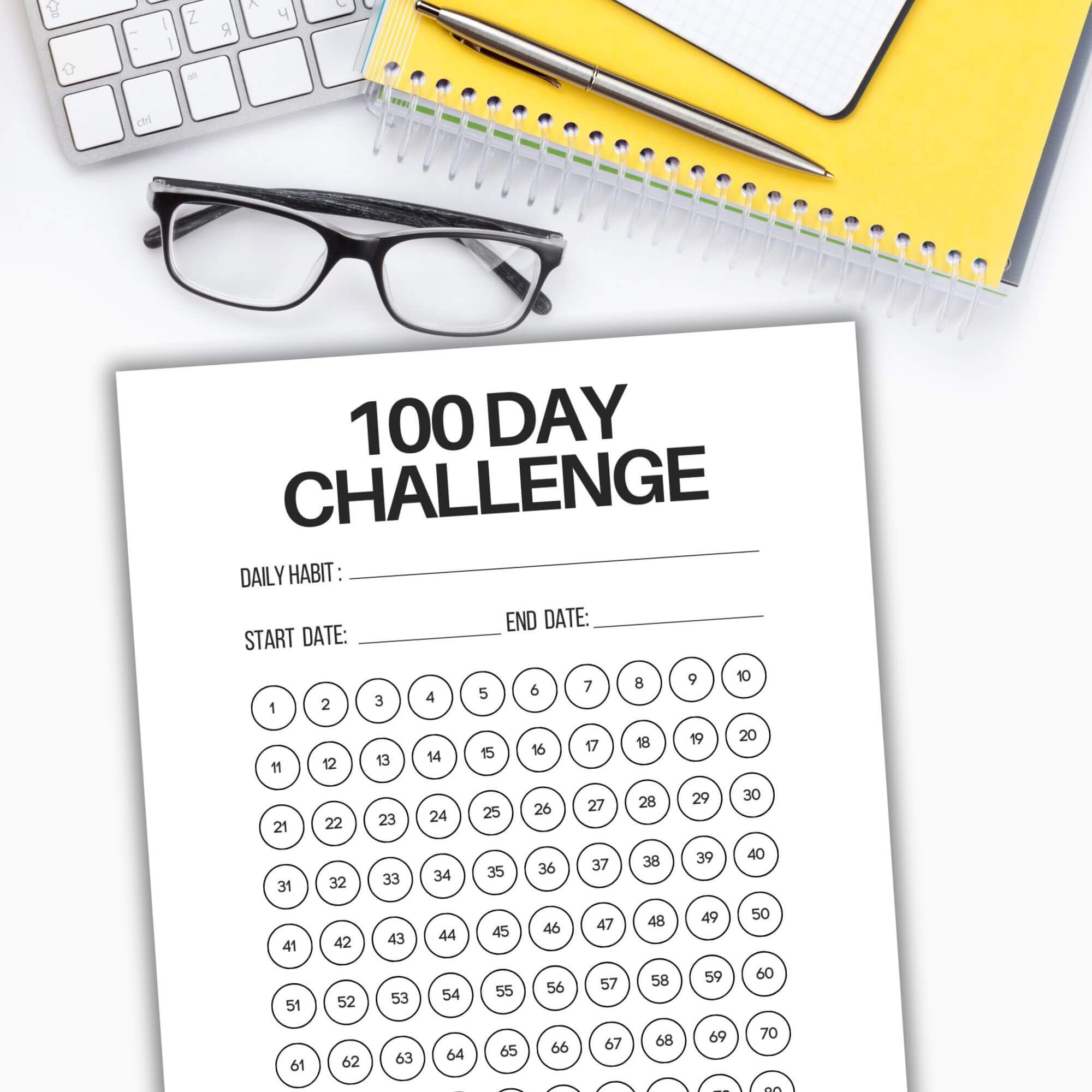
GET MY 100 DAY HABIT CHALLENGE IN MY FREE PRINTABLE LIBRARY
Align Friction with Your Goals
Friction doesn’t have to be a negative force. In actual fact, aligning friction with your goals can help you stay focused and motivated to stick to your positive habits, while also making those less desirable actions more difficult to pursue.
- Add Friction to Distractions & Time Wasters: If something in your life isn’t benefiting you or contributing to your well-being, add friction to make it less appealing. For example, you might unsubscribe from sales email lists and turn off phone notifications to help prevent unwanted spending. By making these activities more effortful, you reduce the likelihood of engaging in them.
- Remove Friction for Positive Habits: On the flip side, when it comes to habits that support your goals, you want to make them as frictionless as possible. For example, if exercise is a goal, make it easy to get started by keeping your workout gear out and ready to go. If you’re trying to eat healthier, prep your meals in advance or keep healthy snacks easily accessible. The less friction there is in starting a good habit, the more likely it is to become a regular part of your routine.
The Bigger Picture
Friction shapes behaviour quietly.
It determines whether something feels effortless or exhausting.
When habits feel “hard,” it’s often not a motivation problem.
It’s a design problem.
Reduce friction in the areas where you want consistency. Add friction where you want protection.
And instead of constantly relying on discipline, your environment starts doing the work for you.
Start small. Remove one barrier. Add one obstacle.
And let that be enough.
So friction is both a good and bad thing! To simplify your life, finding ways to reduce friction in the areas that you want to stay consistent can make a huge difference to building new habits. In that very same way, adding friction works to help build barriers around those things we no longer want to do.
If you want support building consistency, my 100-day habit challenge tracker helps you focus on one habit at a time — without overwhelm.