

50 Goal Setting Journal Prompts for Clarity, Focus & Personal Growth
Goal setting doesn’t need to feel overwhelming.
When your goals are rooted in clarity and self-awareness, they feel energising — not exhausting.
Return to these prompts whenever you feel stuck, unmotivated, or unsure. Your answers will evolve as you do.
The goal isn’t perfection.
It’s alignment.
Setting goals isn’t just about productivity — it’s about direction.
Without clarity, it’s easy to drift through your days reacting instead of choosing. But when you pause to reflect and set intentional goals, everything shifts.
That’s where journaling becomes powerful.
The right goal setting journal prompts help you:
- Get clear on what you actually want
- Identify what’s holding you back
- Align your goals with your values
- Create momentum without overwhelm
Whether you’re planning a new year, a new month, or simply craving clarity, these prompts will help you set goals that feel aligned — not forced.
The Importance of Goal Setting
Goal setting gives you direction, motivation, and a clear path to follow. It helps you invest your time and resources in the right places, making your efforts more effective and purposeful. Writing down your goals has always been an effective way of boosting the likelihood of achieving your goals, but journaling adds a whole extra element to this!
Through journaling for goal setting, you can break down your goals into actionable steps, reflect on your progress, and make necessary adjustments at regular intervals.

Make Them SMART Goals
Before diving into the journal prompts, it’s essential to understand the concept of SMART goals. This framework ensures that your goals are clear and attainable, providing a solid foundation for success.
SMART stands for:
- Specific – A specific goal is well-defined and precise. What do I want to accomplish? Why is this goal important? Who is involved? Where is it located? Which resources or constraints are involved?
- Measurable – A measurable goal has criteria for tracking progress and measuring success. How much? How many? How will I know when it is accomplished?
- Achievable – An achievable goal is realistic and attainable, considering your abilities and resources. How can I accomplish this goal? Is the goal realistic given my current situation?
- Relevant – A relevant goal aligns with your broader objectives and values. Does this goal matter to me? Is it the right time? Does it align with other goals?
- Time-bound – A time-bound goal has a specific timeline, including a start and finish date. When? What can I do six months from now? What can I do six weeks from now? What can I do today?
For example, if your goal is to lose 15kg… that’s all well and good but…
How will you do that? When are you going to do that by? How will you know you’re on track with that goal? This is where the SMART goal setting comes into play!
This is where New Year’s resolutions often fail… we throw out those random ideals, without the intention and plan to back them up!
Instead, your goal could be I am going to lose 15kg in the next 6 months so that I can improve my physical health and wear a beautiful dress for my wedding. I will do weekly weigh-ins and take my measurements to track progress. I will be attending 2 gym classes a week and following a healthy eating plan with support from a health coach.
So now you’ve got a plan that has a way of measuring your progress and a deadline as well as a strong personal motivation and strategies to make it happen.
Sometimes getting right to the base level of your motivation for your particular goal can be tricky. That’s where intentional journaling can be a great tool to help you get crystal clear on the why and how of your goals.
Plus, you’re far more likely to achieve them if you’re choosing goals that you are deeply motivated by!
Now onto the journaling prompts for goal setting!
How to Use Goal Setting Journal Prompts Effectively
Goal setting isn’t about writing a list and hoping it happens.
To make these prompts work:
- Choose 5–10 prompts per session (not all at once)
- Write honestly, without editing yourself
- Look for patterns in your answers
- Turn insights into 1–3 actionable steps
Journaling isn’t about perfect answers — it’s about honest awareness.
30 Goal-Setting Journal Prompts
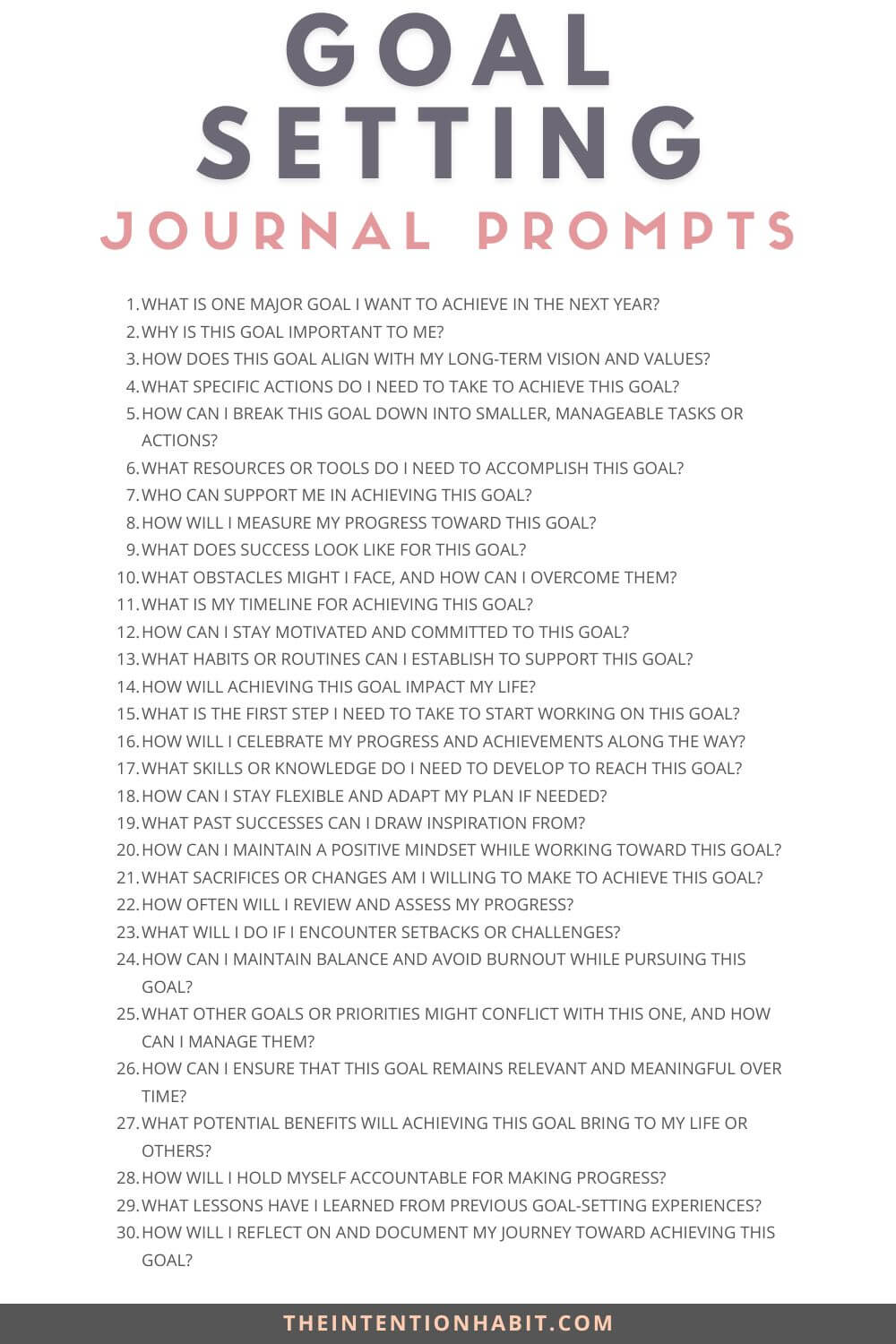
Here are 30 journal prompts for goal setting to help you gain clarity on your goals, ensure they are SMART goals, and assess your progress:
- What is one major goal I want to achieve in the next year?
- Why is this goal important to me?
- How does this goal align with my long-term vision and values?
- What specific actions do I need to take to achieve this goal?
- How can I break this goal down into smaller, manageable tasks or actions?
- What resources or tools do I need to accomplish this goal?
- Who can support me in achieving this goal?
- How will I measure my progress toward this goal?
- What does success look like for this goal?
- What obstacles might I face, and how can I overcome them?
- What is my timeline for achieving this goal?
- How can I stay motivated and committed to this goal?
- What habits or routines can I establish to support this goal?
- How will achieving this goal impact my life?
- What is the first step I need to take to start working on this goal?
- How will I celebrate my progress and achievements along the way?
- What skills or knowledge do I need to develop to reach this goal?
- How can I stay flexible and adapt my plan if needed?
- What past successes can I draw inspiration from?
- How can I maintain a positive mindset while working toward this goal?
- What sacrifices or changes am I willing to make to achieve this goal?
- How often will I review and assess my progress?
- What will I do if I encounter setbacks or challenges?
- How can I maintain balance and avoid burnout while pursuing this goal?
- What other goals or priorities might conflict with this one, and how can I manage them?
- How can I ensure that this goal remains relevant and meaningful over time?
- What potential benefits will achieving this goal bring to my life or others?
- How will I hold myself accountable for making progress?
- What lessons have I learned from previous goal-setting experiences?
- How will I reflect on and document my journey toward achieving this goal?
Use this mid-year goal reflection exercise to help keep you motivated and focused on your long-term goals.
Goal setting doesn’t need to feel overwhelming.
When your goals are rooted in clarity and self-awareness, they feel energising — not exhausting.
Return to these prompts whenever you feel stuck, unmotivated, or unsure. Your answers will evolve as you do.
The goal isn’t perfection.
It’s alignment.
Further Reading:
- Overcoming Common Barriers To Achieving Your Goals
- How To Do A Mid-Year Goal Check-In
- 60 Monthly Goal Ideas & Benefits Of Setting Monthly Goals
- 100 Life-Changing 30-Day Challenge Ideas
- Reward Yourself: 150 Self-Rewards That Mostly Aren’t Food
- How to set relationship goals with your partner


